Inclusive Pre-Occupancy Design Evaluation
An end-to-end framework that begins with older adults' lived spatial experience, translates it into computational decision logic and digital human profiles, and implements it in a Unity-based tool that generates design reports and recommendations, so inclusive spatial performance can be tested before construction.
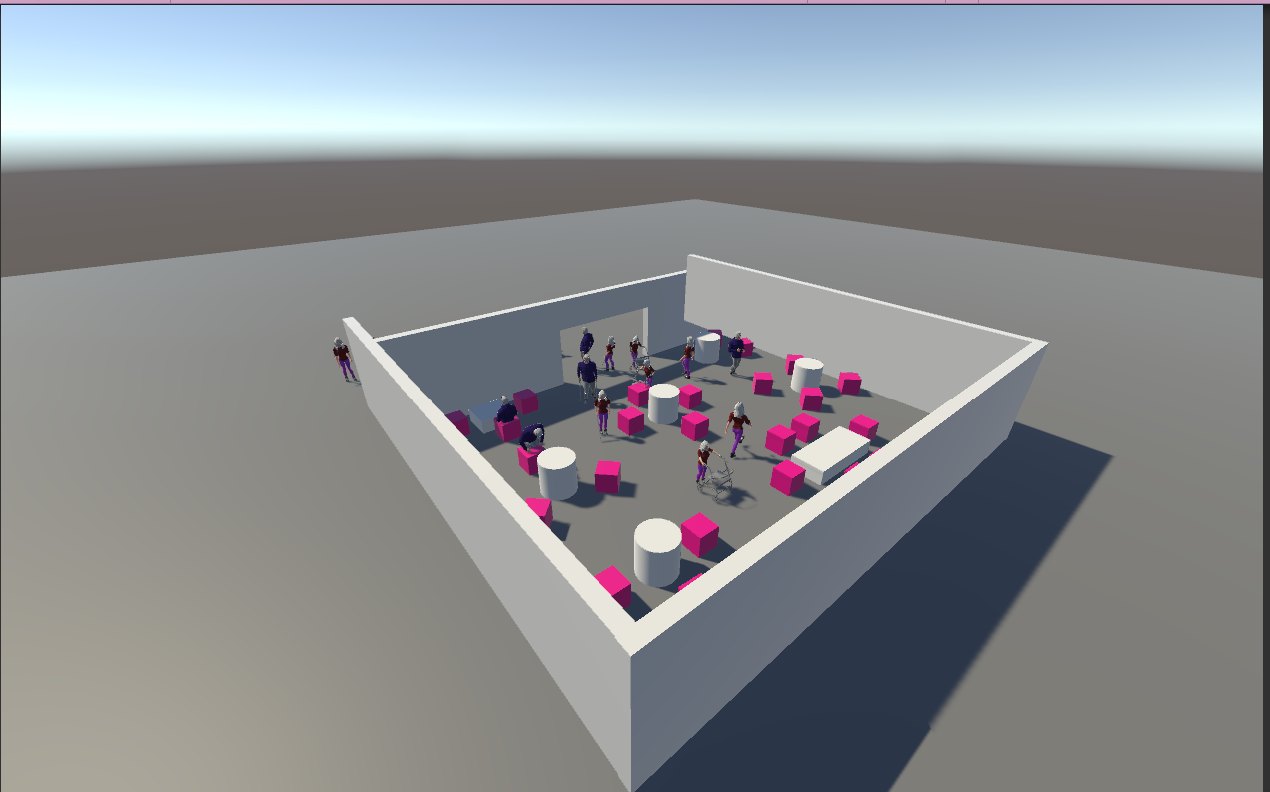
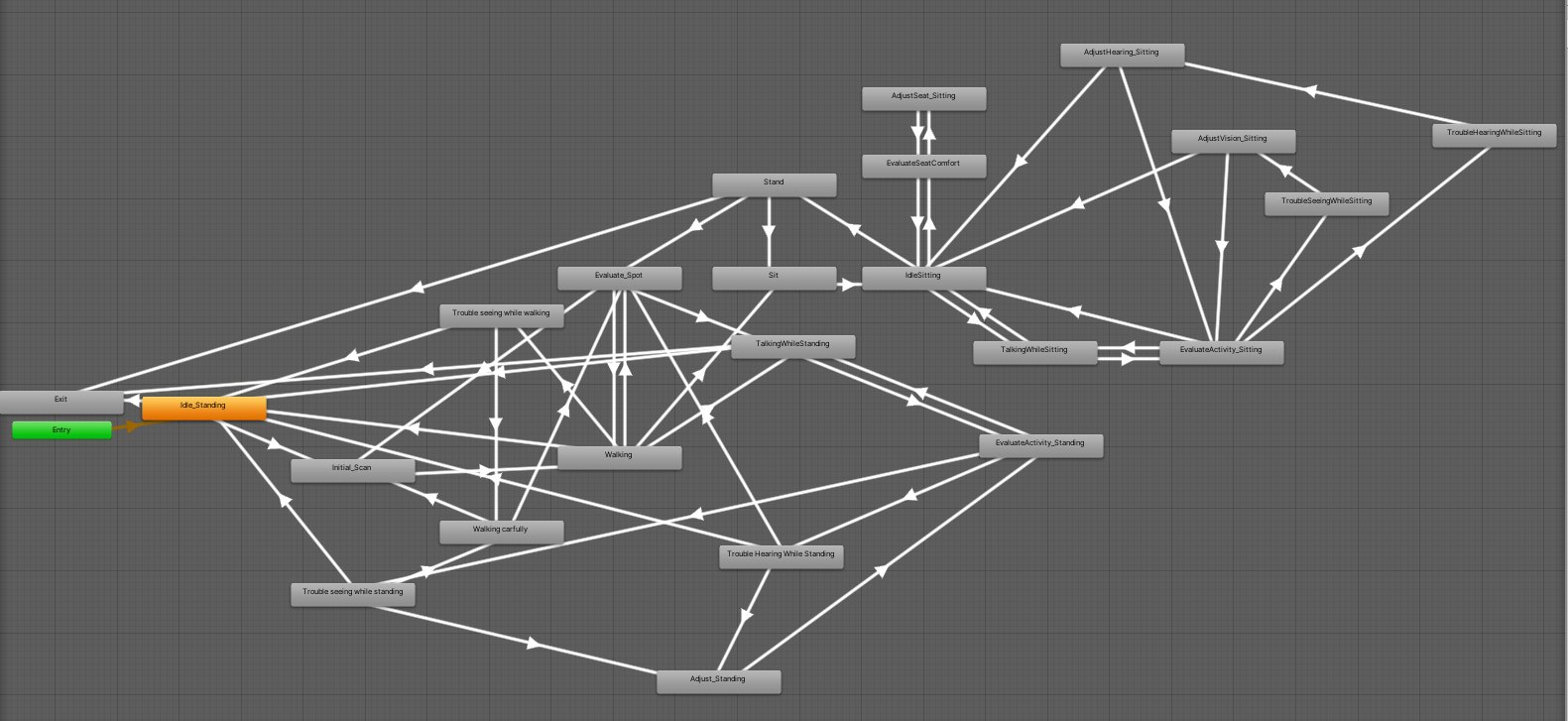
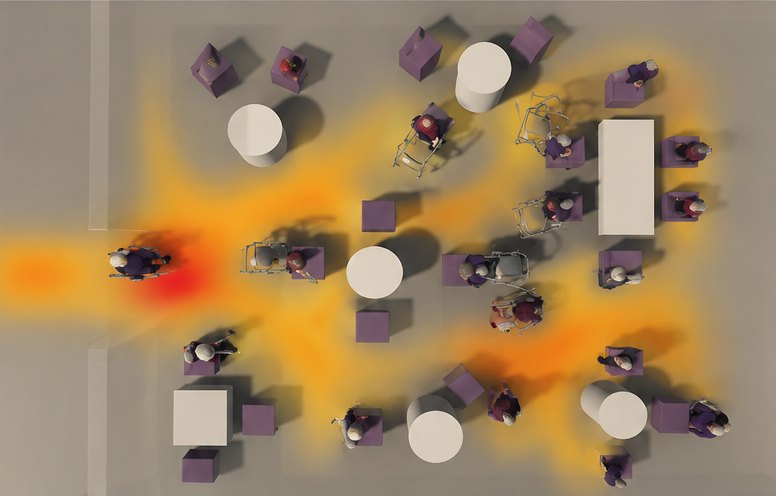
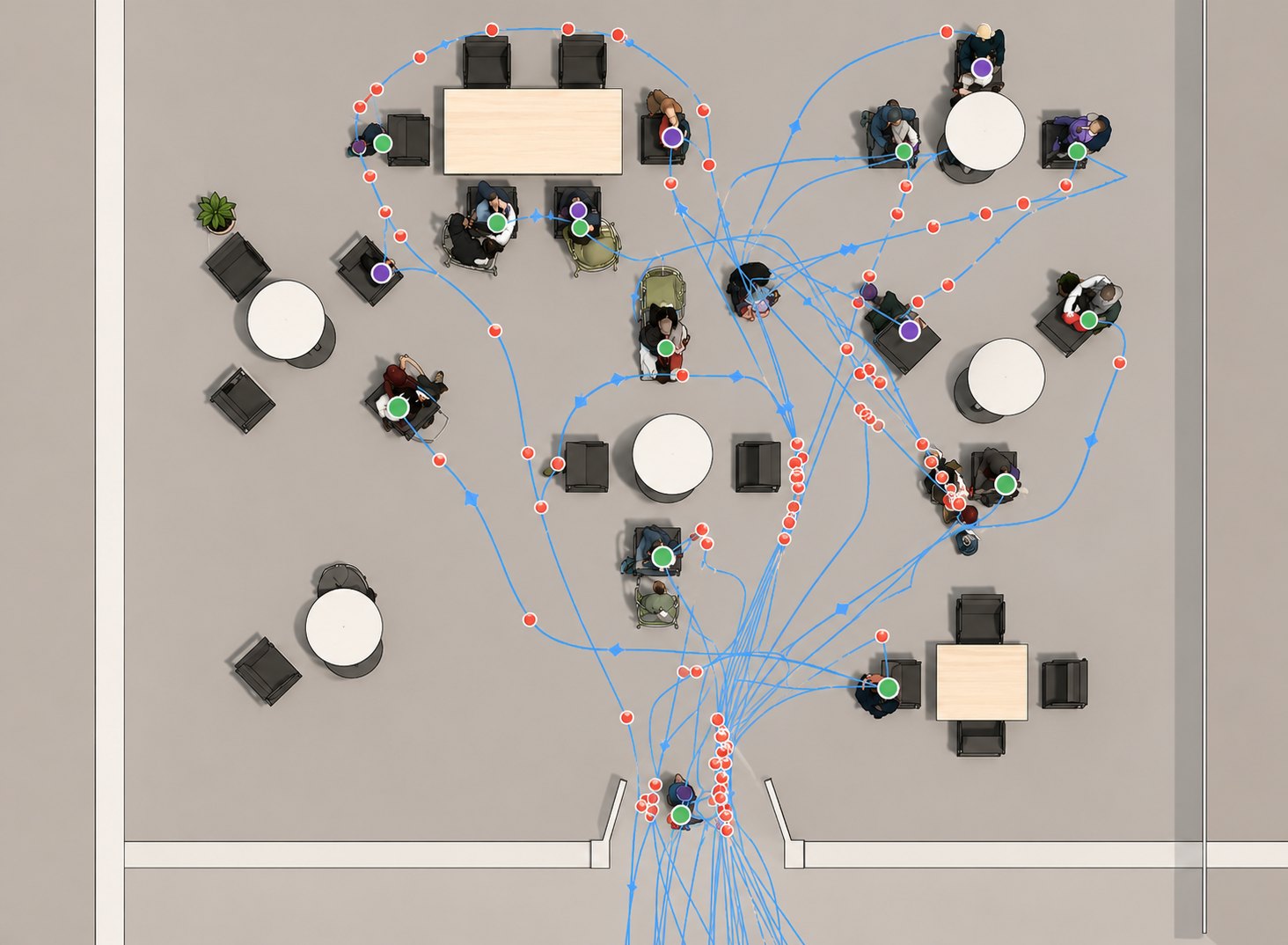
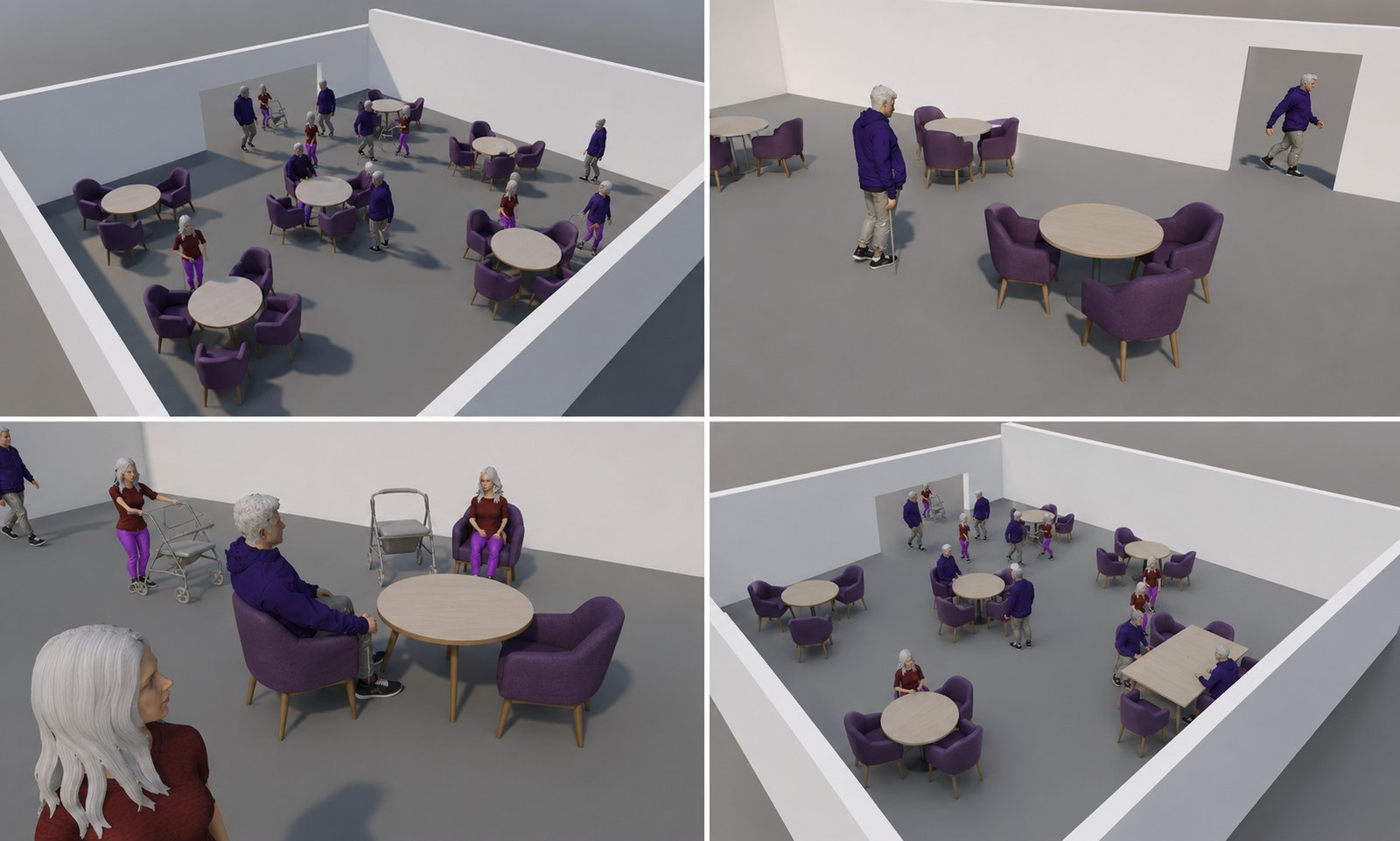
SpaceScript
A participatory method I developed to study older adults' lived spatial experience through movement, seating, conversation, reflection, and real-time spatial adaptation. Instead of asking participants only to describe past experiences, SpaceScript invites them to move through a flexible setup, rearrange furniture, test comfort, and explain their decisions as they unfold, making visible the spatial judgments and social negotiations that conventional accessibility audits miss.
Lived experience → design evidence
The translation process records the spatial context, trigger, evaluation, response and outcome of a single observed decision, then converts these into design criteria, digital human profile attributes, simulation rules, and reportable recommendations, making participant reasoning traceable and explainable.
Pre-occupancy simulation
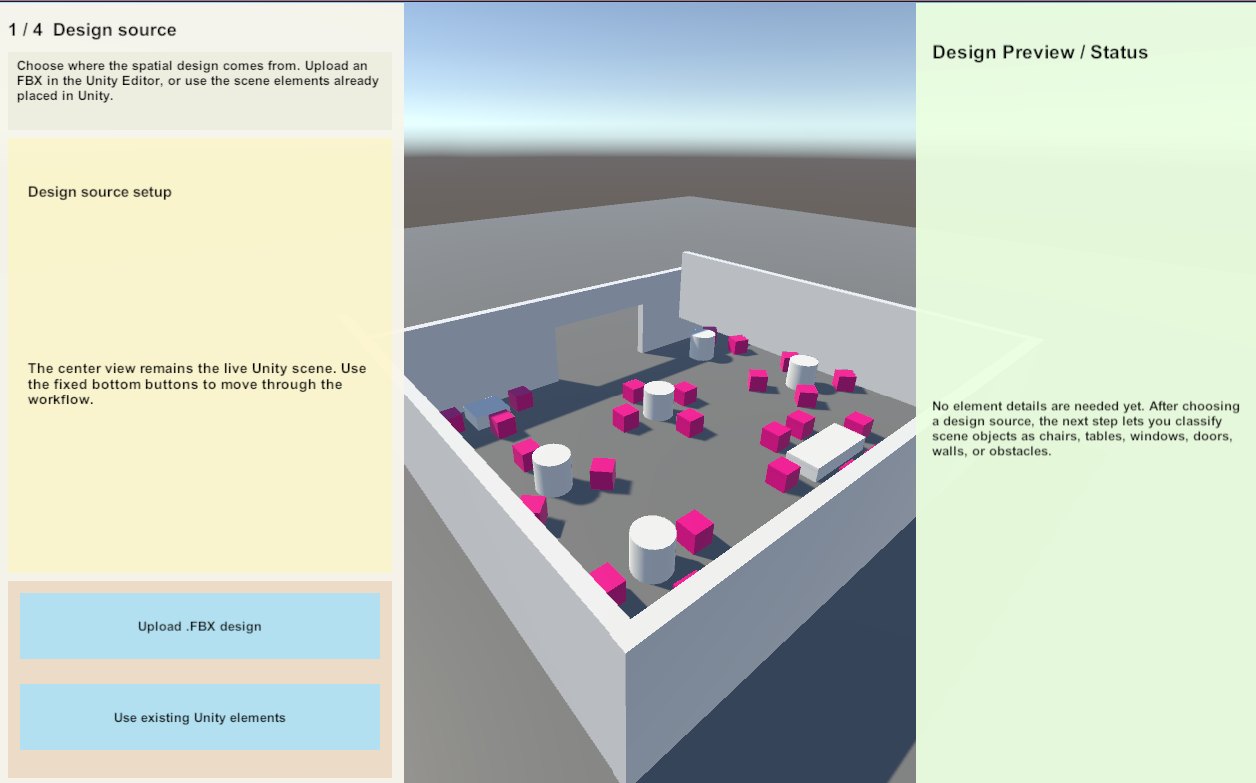
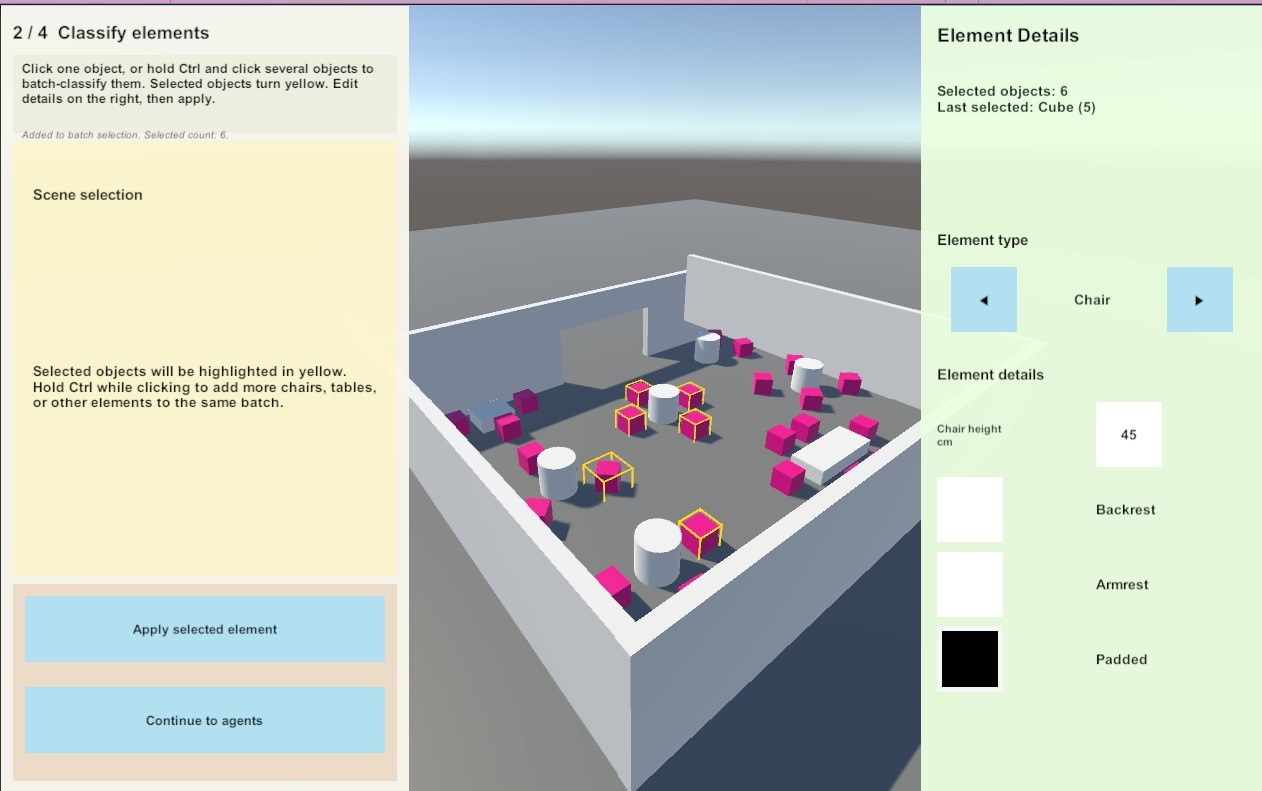
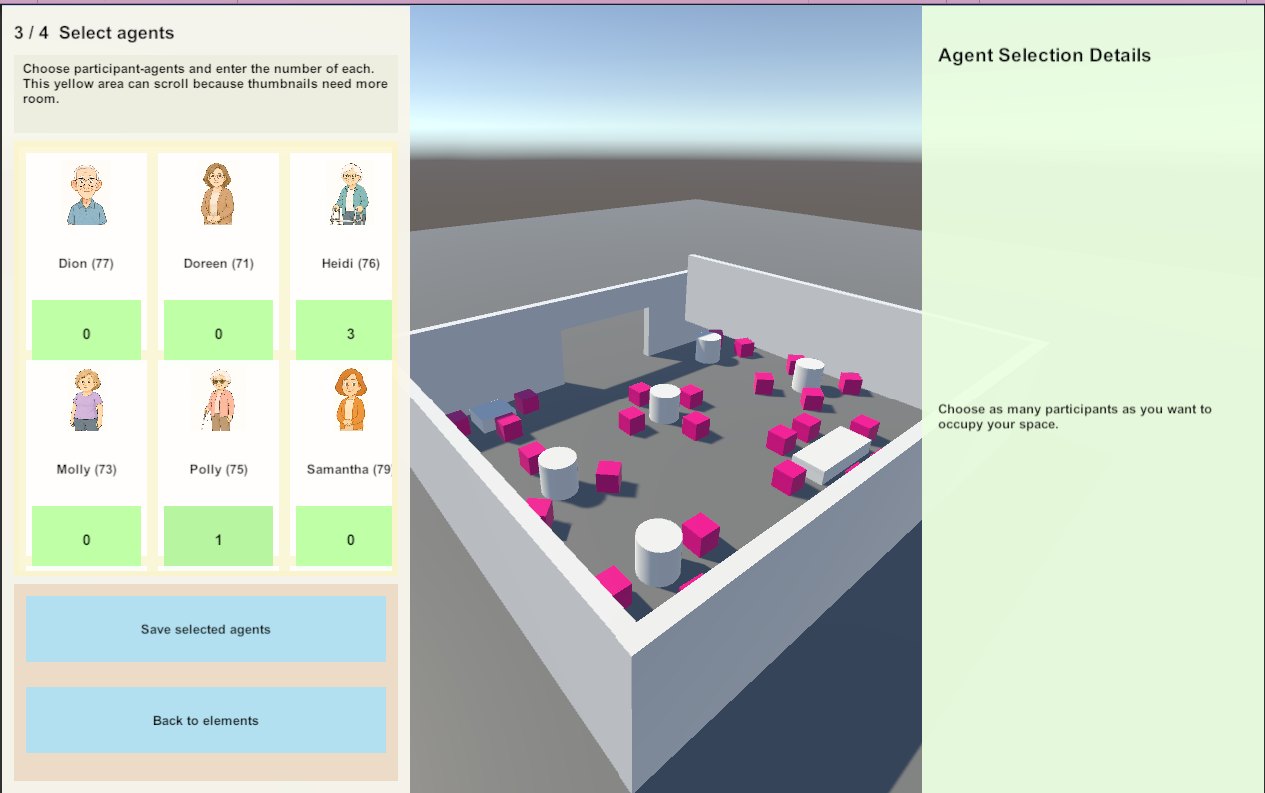
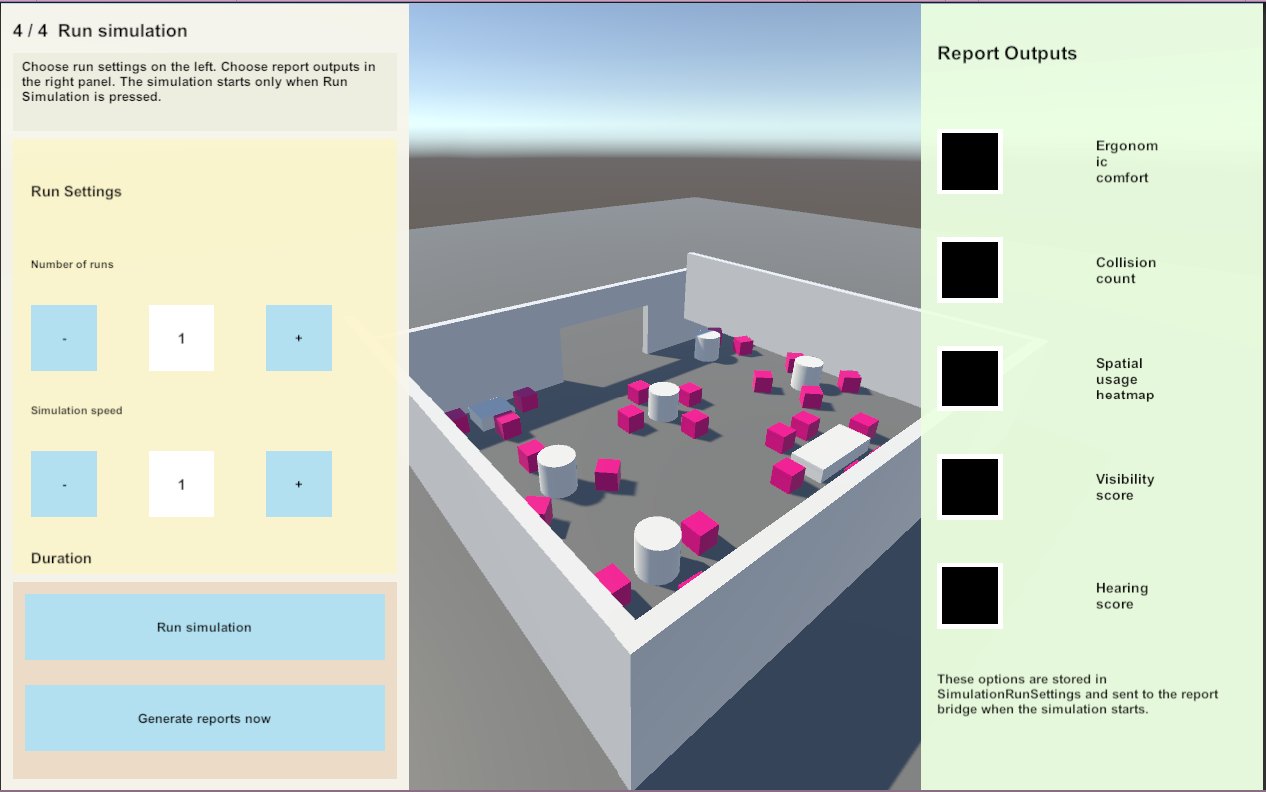
A four-step, designer-facing workflow, import a layout, classify elements, select participant-agents, run and report. Digital human agents move through proposed layouts and generate comfort scores, congestion heatmaps, collision counts, and visibility and hearing scores, so interventions can be compared as evidence rather than assumption.
- RoleDoctoral researcher · sole method author
- MethodsParticipatory & embodied observation, digital human modelling, Unity simulation
- OutputsMethod, translation framework & working evaluation tool, plus multiple papers, presentations & talks
- SupervisorsP. Hansen · F. Maurer · J. Holroyd-Leduc · H. Cai
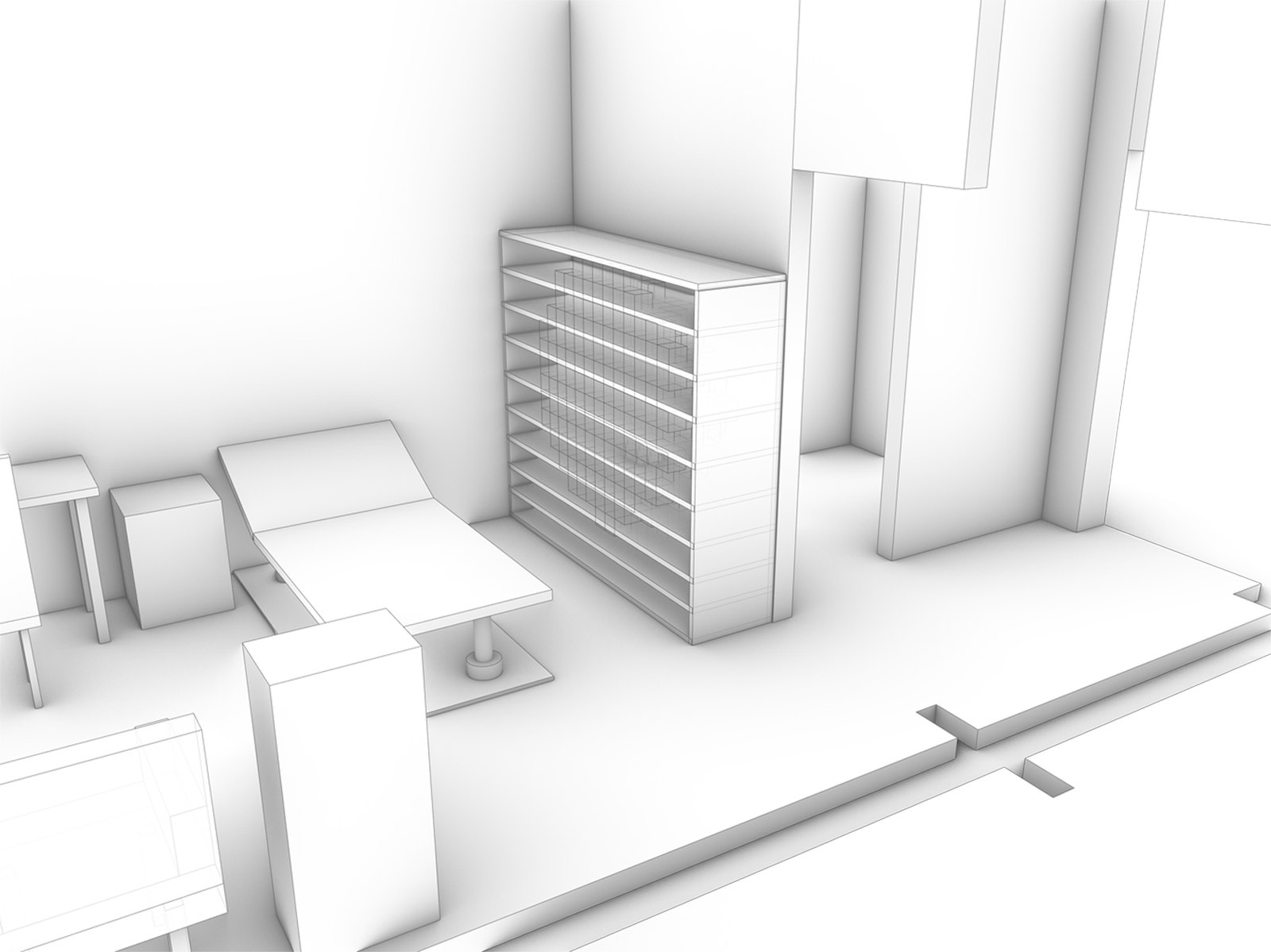
Digital Human Models for Ergonomic Interior Evaluation
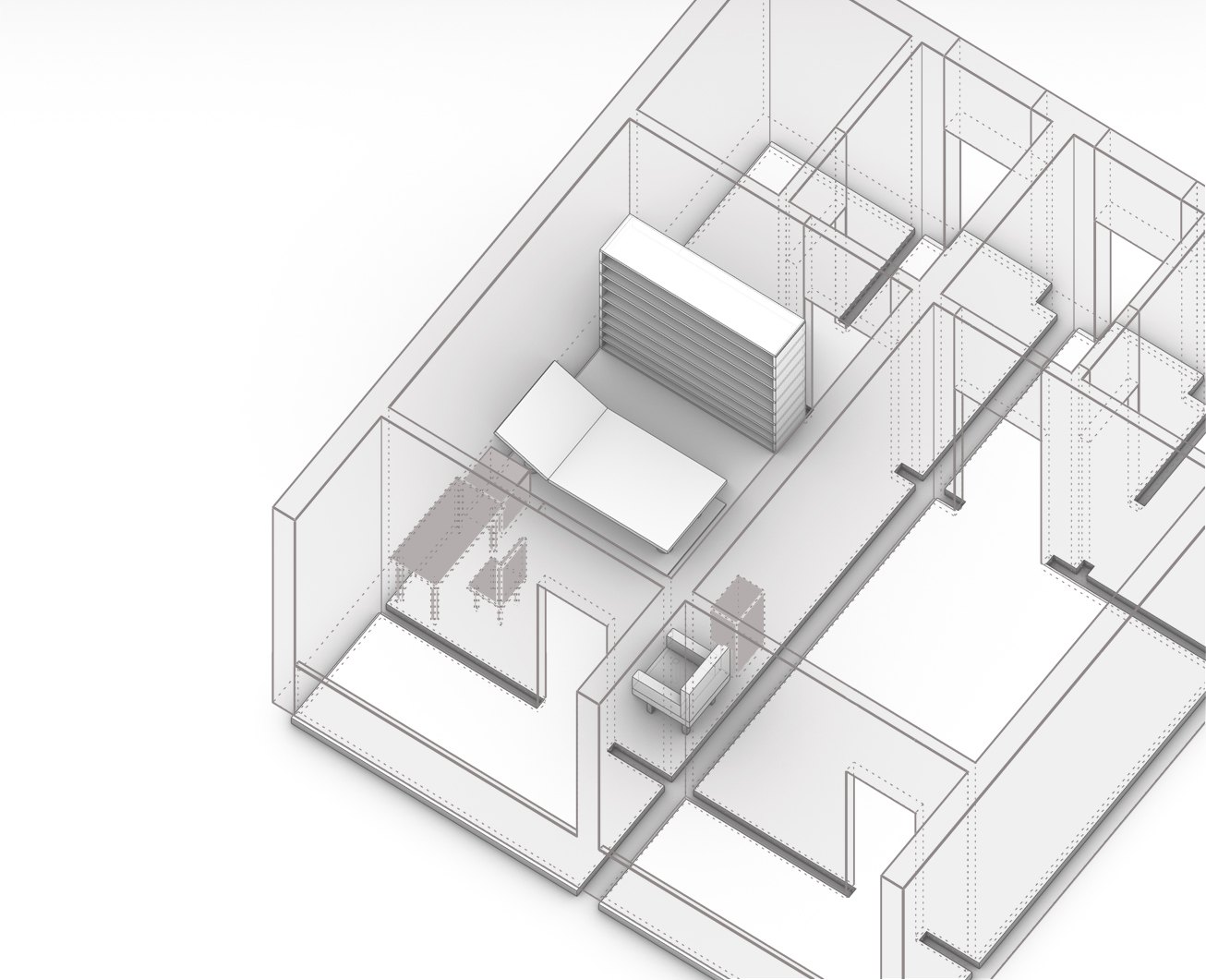
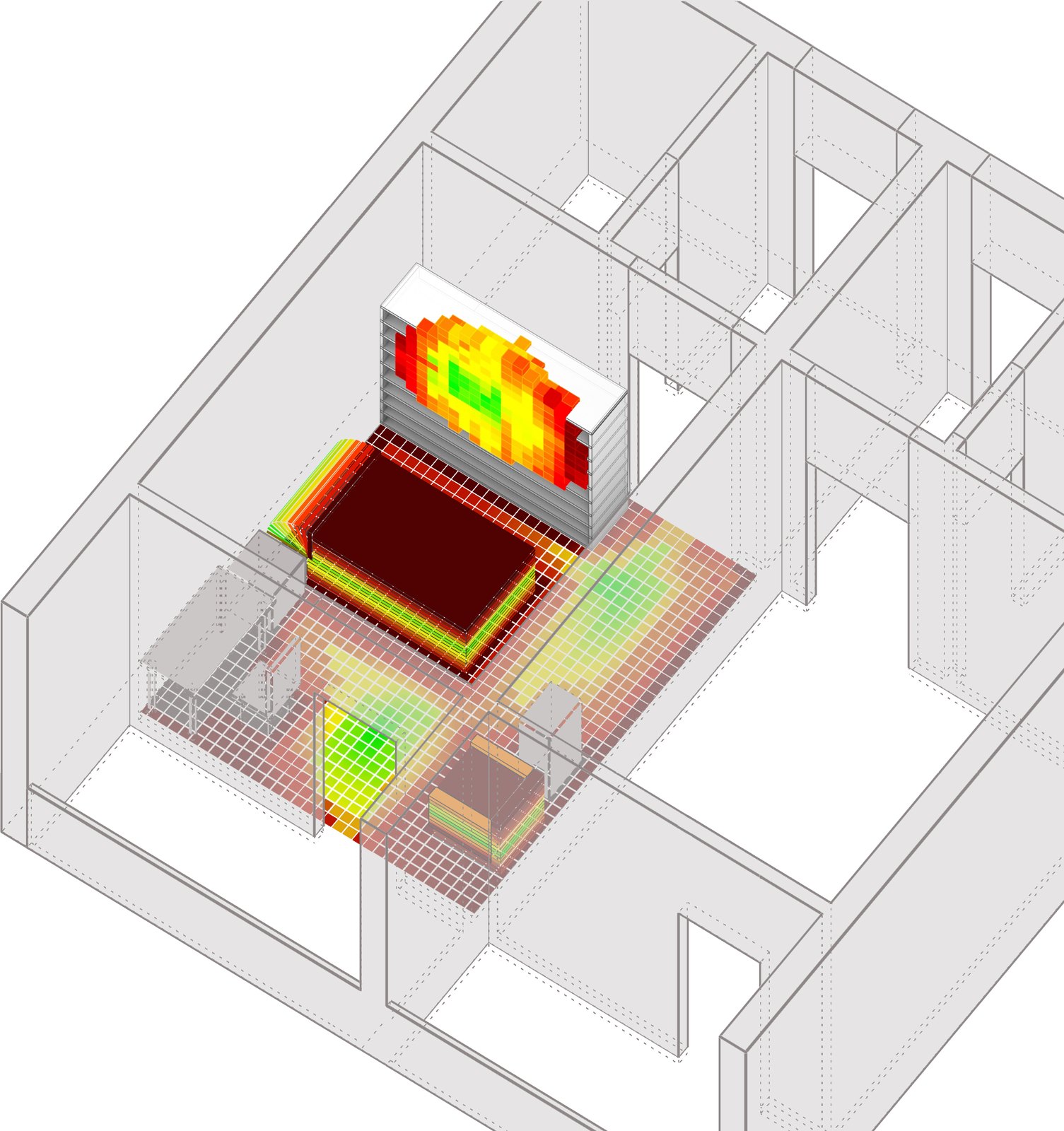
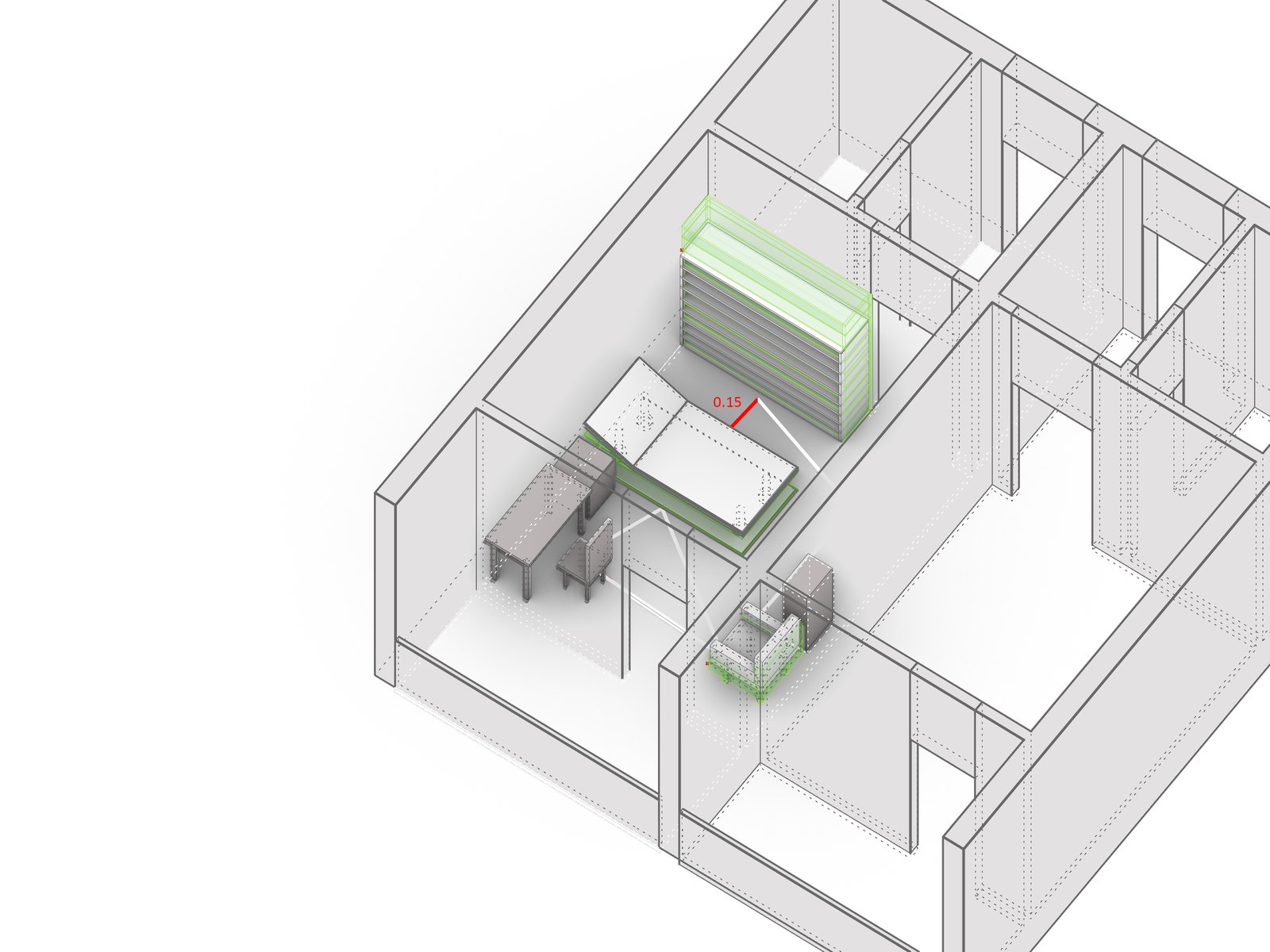
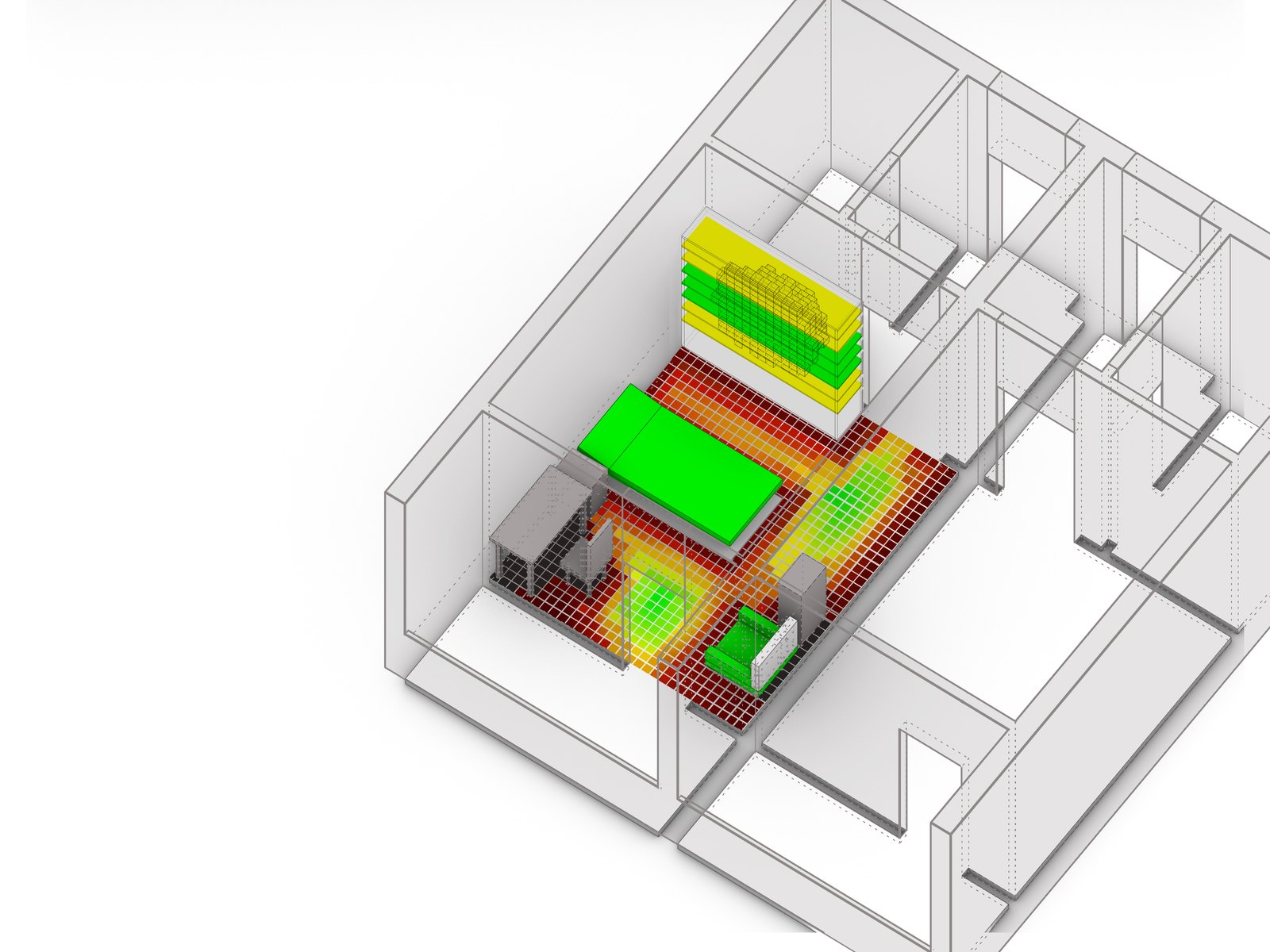
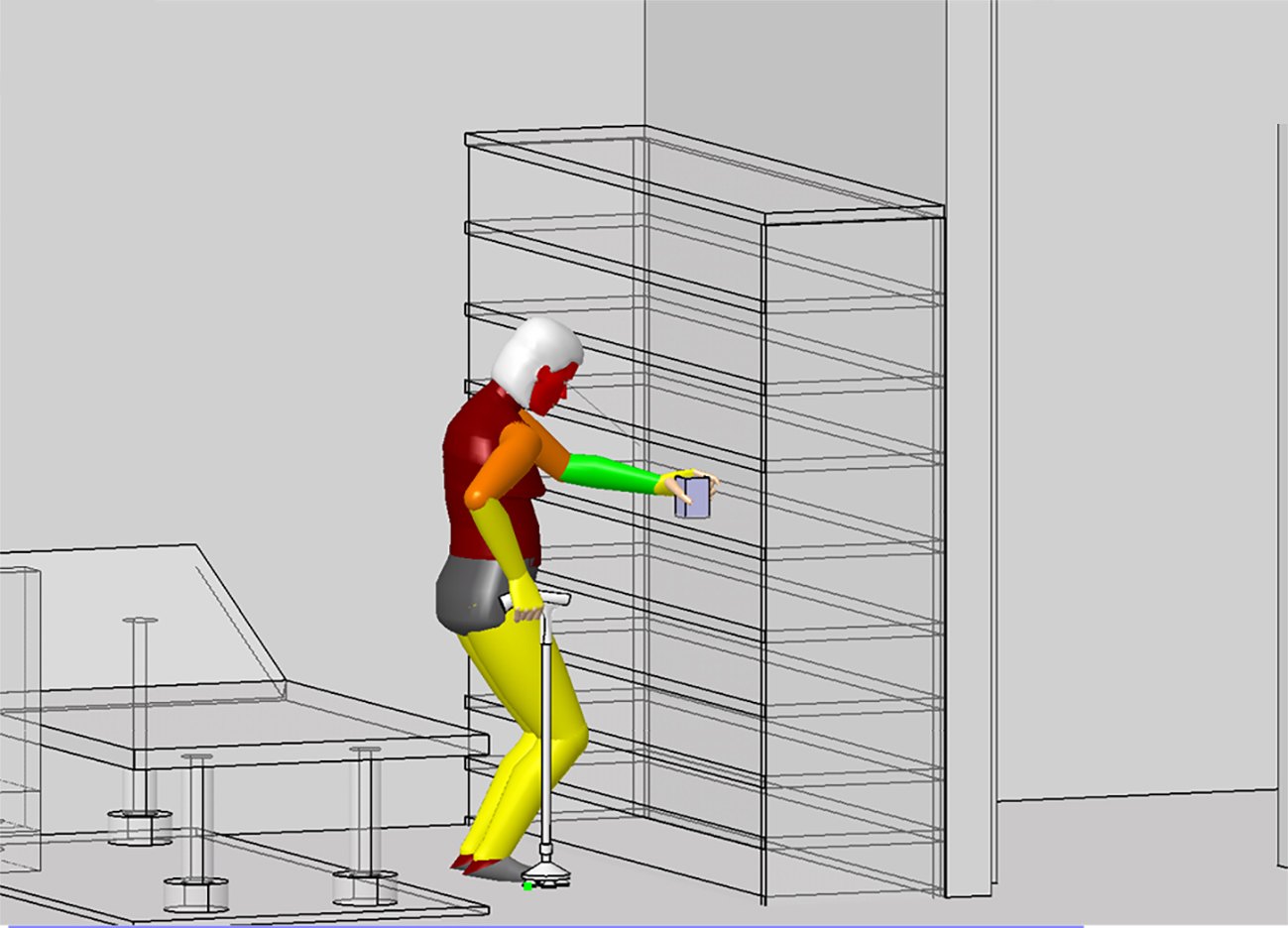
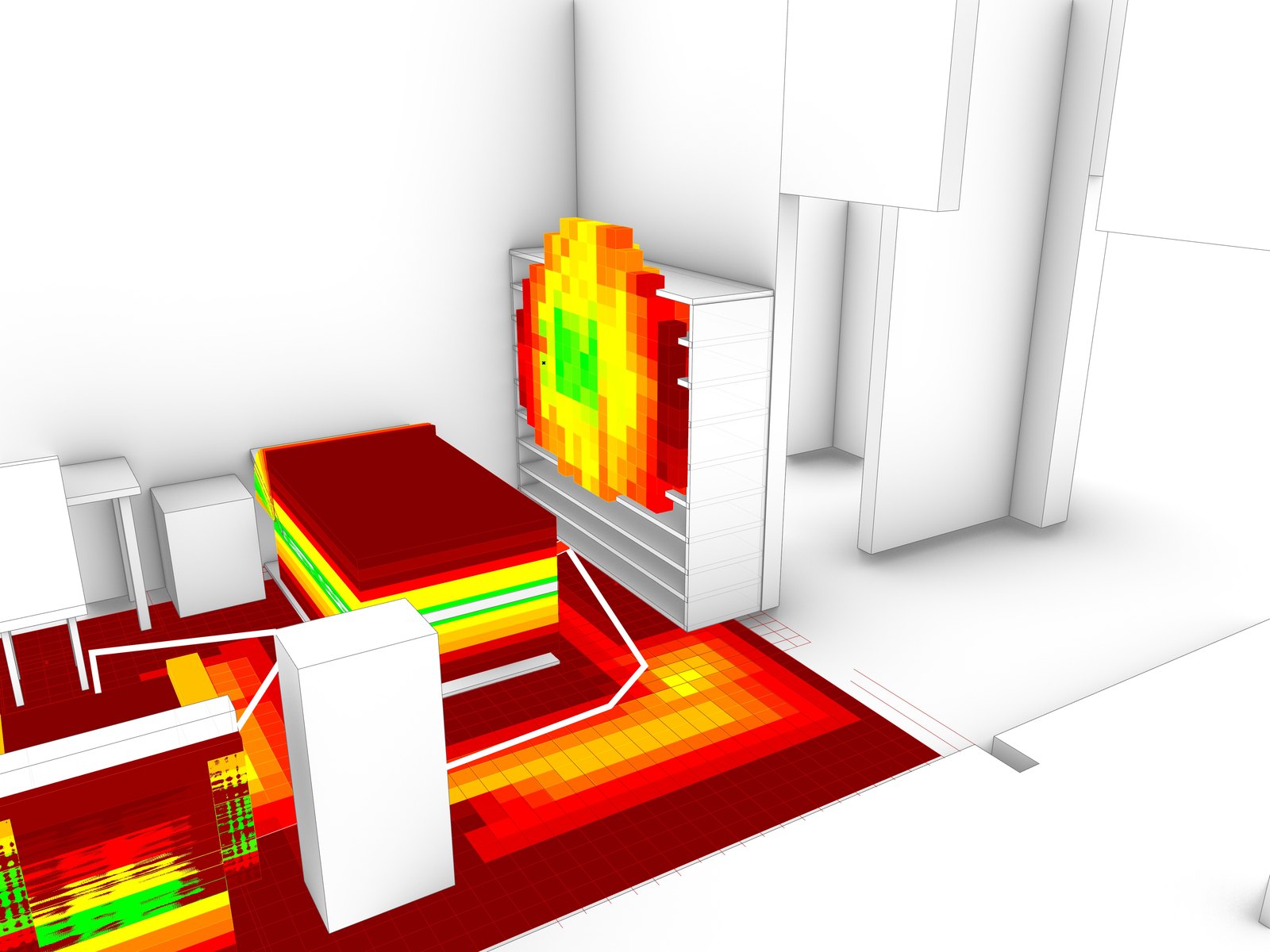
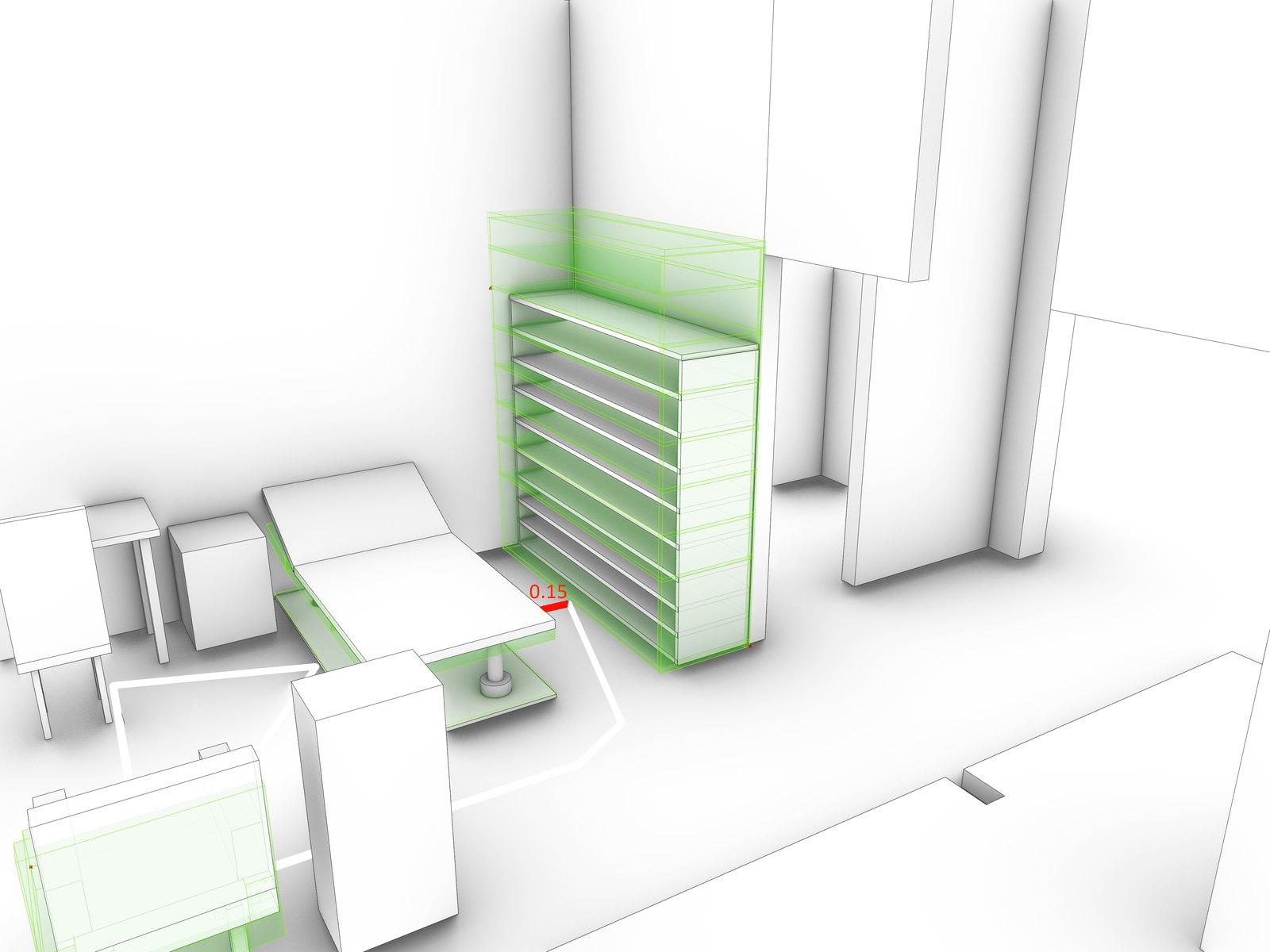
A digital evaluation framework for assessing ergonomic comfort in interior environments using digital human models. The workflow connected anthropometric data, posture libraries, furniture parameters and interior-layout variables to produce comfort scores, heatmaps and design recommendations. Digital human models of older adults tested how mobility aids, reach, posture, circulation, wardrobes, chairs and beds affected comfort, collision risk and independence.
Built in a Rhino / Grasshopper and Human Builder workflow, the framework made ergonomic comfort visible as design evidence, showing how specific furniture dimensions and layout decisions affected different users' comfort, reach, movement and independence.
Published: El-Ghazouly & El Antably (2021), Technology | Architecture + Design 5(2).
VR Campus Navigation, Wayfinding & Gaze
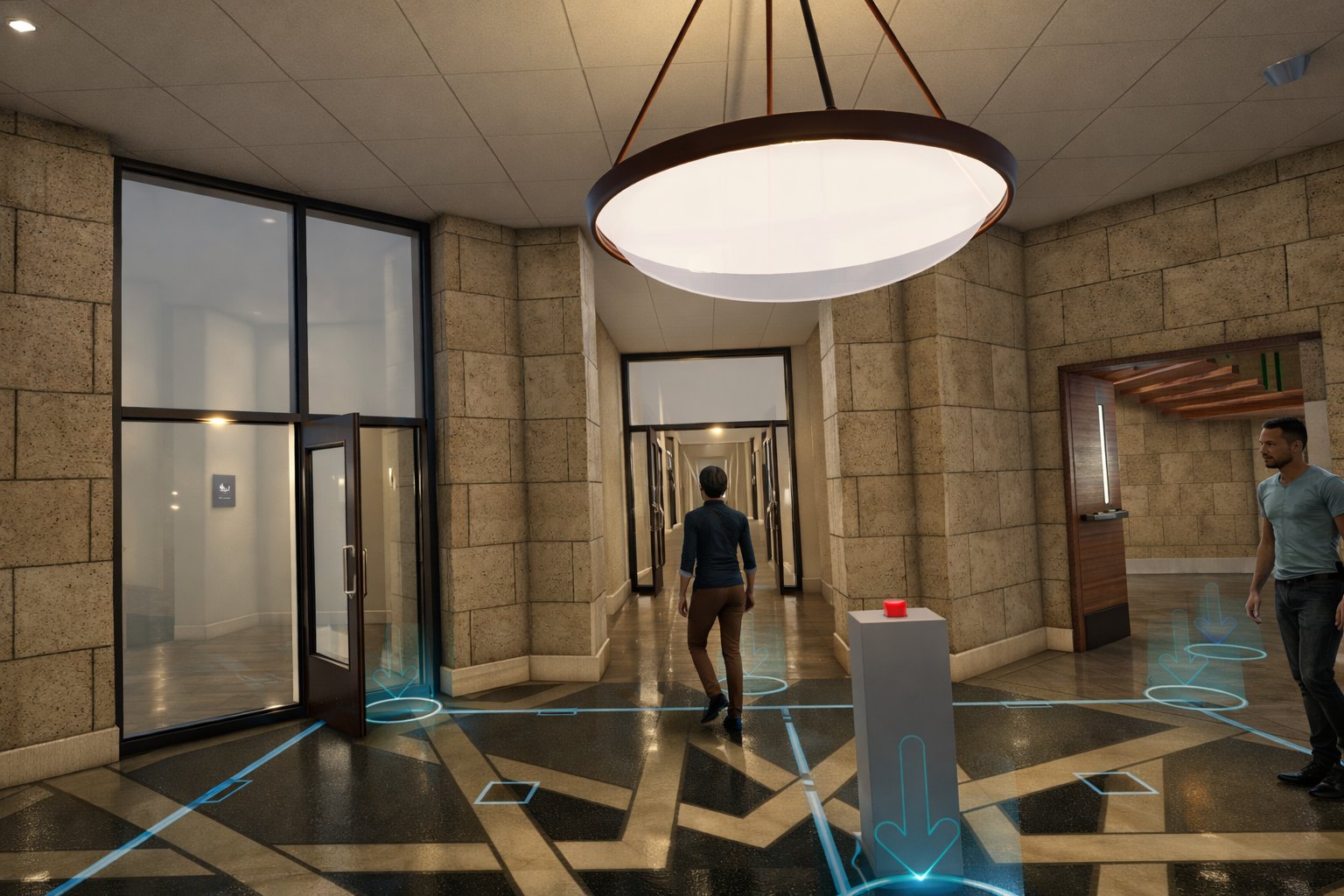
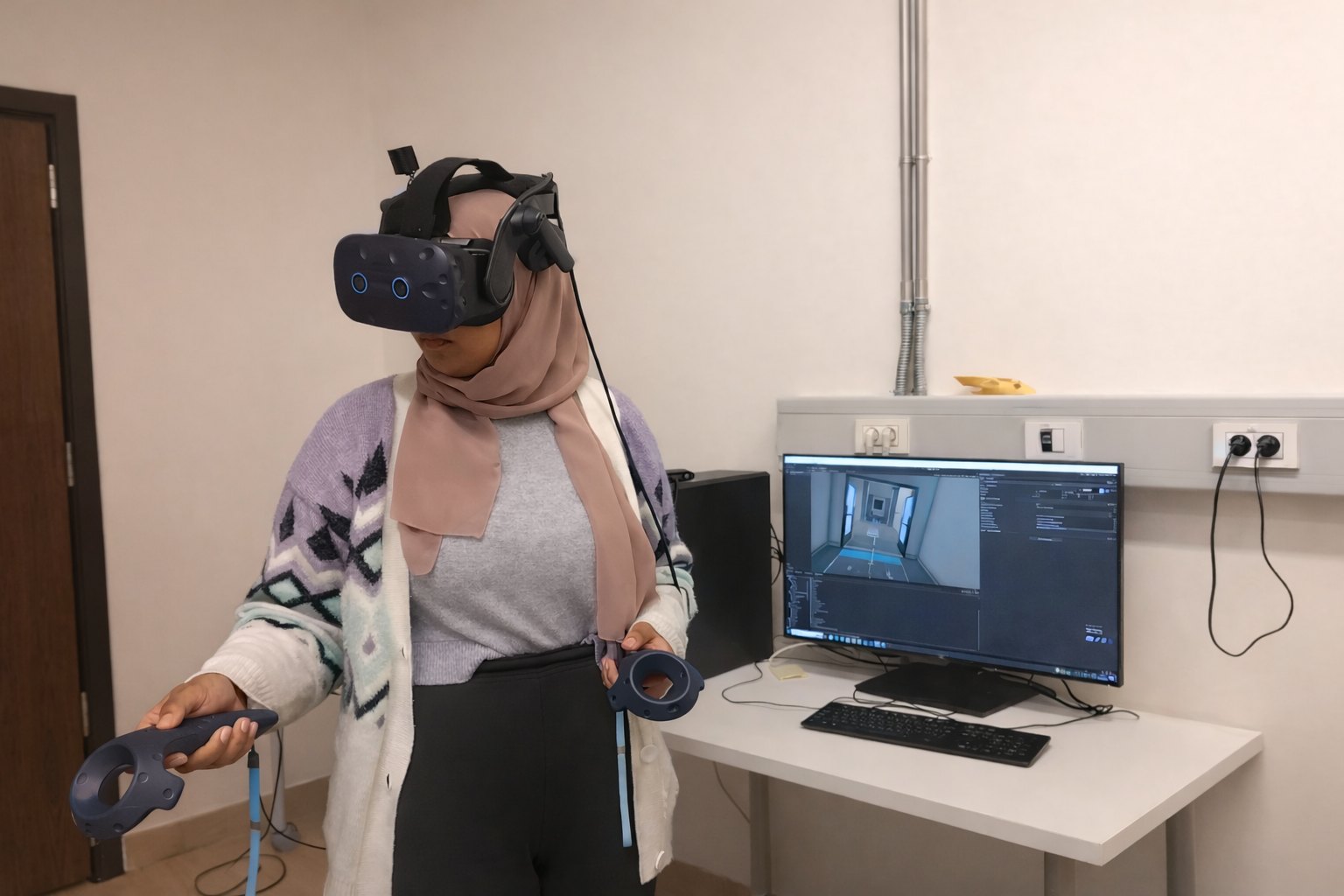
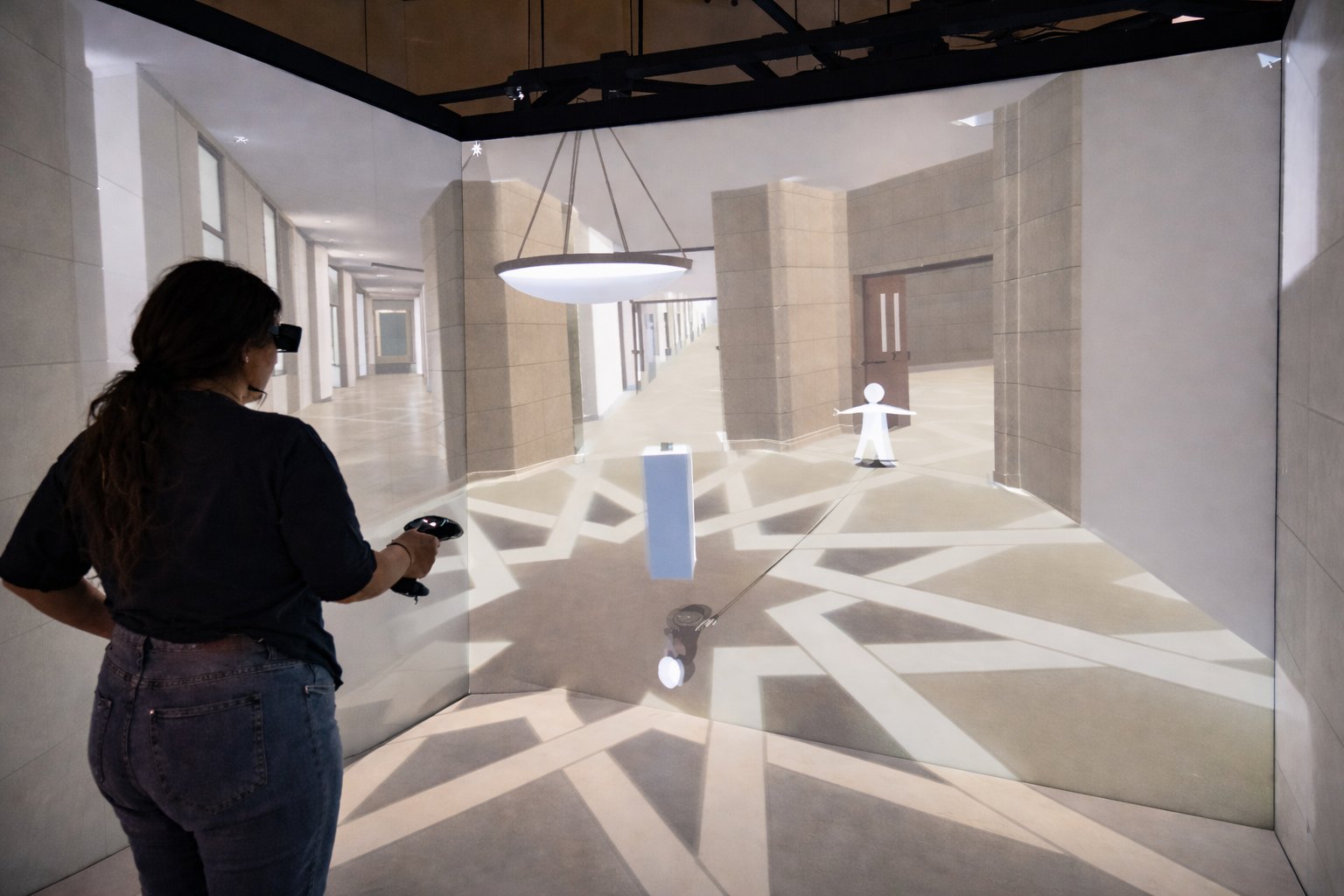
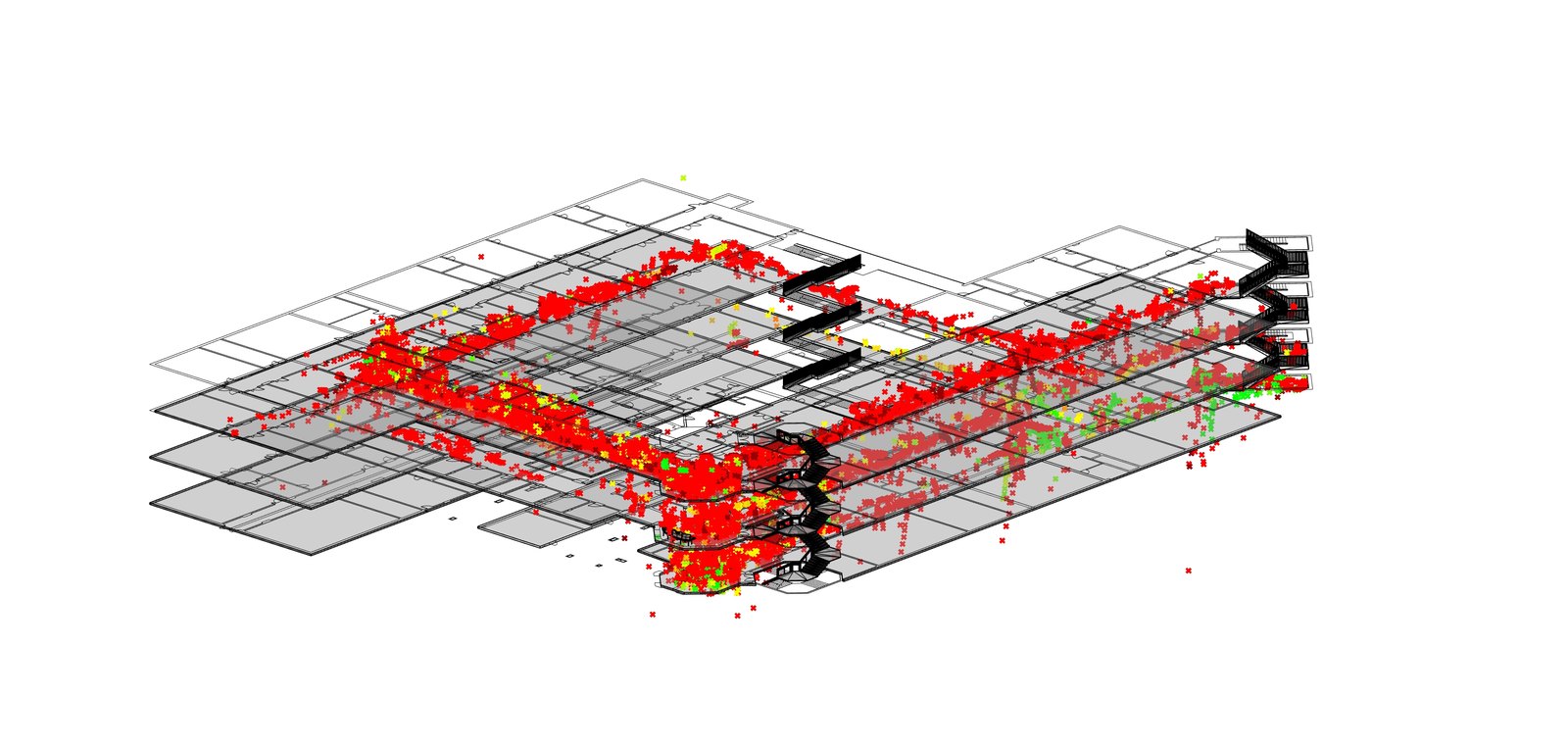
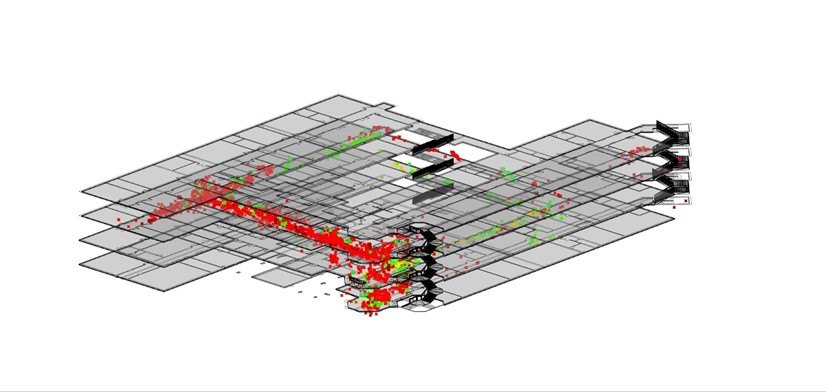
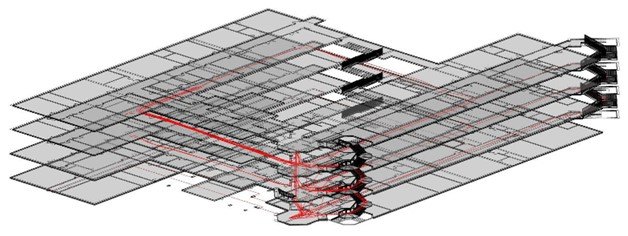
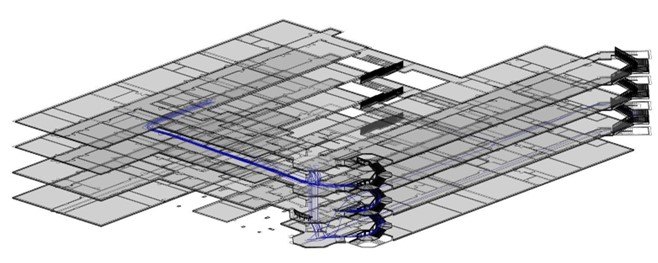
As Architectural Modeling Lead in the EVE VR Lab, I built a virtual replica of a university campus building to study how students navigate complex spaces and interpret signage. The campus was modeled in Revit from photographic site surveys to reproduce architectural details, materials, signage and spatial cues, then implemented in Unity with interactive VR elements.
Students experienced the simulation through HTC Vive headsets and a 3×3×3 CAVE, while eye-tracking and motion-tracking captured gaze behavior, movement paths, reorientation moments and navigational decisions. Central lobbies acted as reorientation hubs; T-junctions created decision-making difficulty; and movement and gaze data revealed exactly where spatial clarity failed.
Presented: SSS15, Malaysia (2026), "Visibility Is Not Enough."