Design as experience
Space taught not only as form and drawing, but as something people move through, choose, use, and negotiate, tested in game engines rather than only viewed as static models.
Accessibility as design thinking
Inclusive and age-friendly design taught as a creative, ethical method, identifying barriers, translating user perspectives into design criteria, not as code compliance.
Digital tools as critique
Unity, VR, simulation and visualization used to interrogate a design and test its consequences before construction, as design-thinking methods, not just software skills.
Inclusive pedagogy
Staged submissions, transparent rubrics, and feedback built for revision, accommodating neurodivergent students, students with disabilities, mature and returning learners.
- Who is this space for, and what assumptions are built into this plan?
- What choices does it allow, and how might different bodies, ages, abilities, or sensory needs change the way it is experienced?
- What does this drawing reveal, and what does it hide? Who is represented in this model?
Sample Courses
Two courses I designed, samples, not limits.
Examples of my own course design. I welcome teaching across the design curriculum; these show my approach to a block-week studio and a semester-long studio.
Applied Accessibility in Architecture
A block-week studio on accessibility as a creative design method.
Rather than treating accessibility as a checklist, this course teaches students to identify barriers, translate user perspectives into design criteria, and propose spatial interventions that improve participation, dignity, comfort and social inclusion. Over five intensive days students move from framing accessibility beyond compliance, to guided observation and audit, to translating findings into design criteria, and finally to a collaborative design sprint redesigning a small social space.
Block-week arc: Day 1 accessibility as design method → Day 2 observation & audit → Day 3 from needs to design criteria → Day 4 workflow integration & design sprint → Day 5 present, defend & reflect. Developed through the University of Calgary Course Design Program.
Participation-Led Architecture Design Studio
A semester studio designing for social participation, spatial experience, and game-engine testing.
Students learn to observe how people sit, move, gather, withdraw, converse, eat, wait and orient themselves, then translate these observations into programs, spatial concepts, indoor–outdoor relationships and navigable game-engine walkthroughs. The studio begins from the social experiences a space should support and develops through precedent critique, situated field study, participation-focused programming, massing and concept, and iterative peer play-testing, culminating in a design presented through drawings, diagrams, models, a game-engine walkthrough, and a participation argument defended before an external jury.
Semester arc: participation as a design driver → learning from precedents & real users → participation-focused programming → massing & experiential intent → indoor–outdoor proposal → game-engine workflow → walkthrough prototype review → developing participation sequences → peer play-testing & iteration → final external jury.
Courses Taught
Ten courses, four universities.
Teaching-assistant experience across architectural design, representation, history and theory, technology, environmental studies, and introductory programming.
Also taught / assisted in: Python programming, Unity, Unreal Engine, VR, and digital spatial prototyping.
Selected Student Work
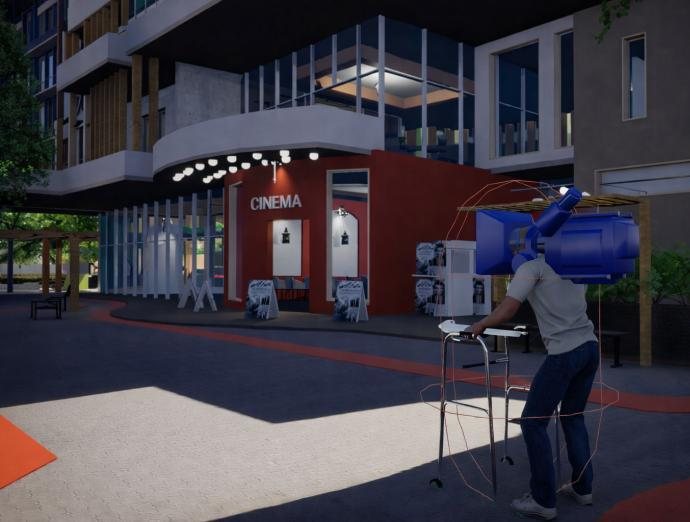
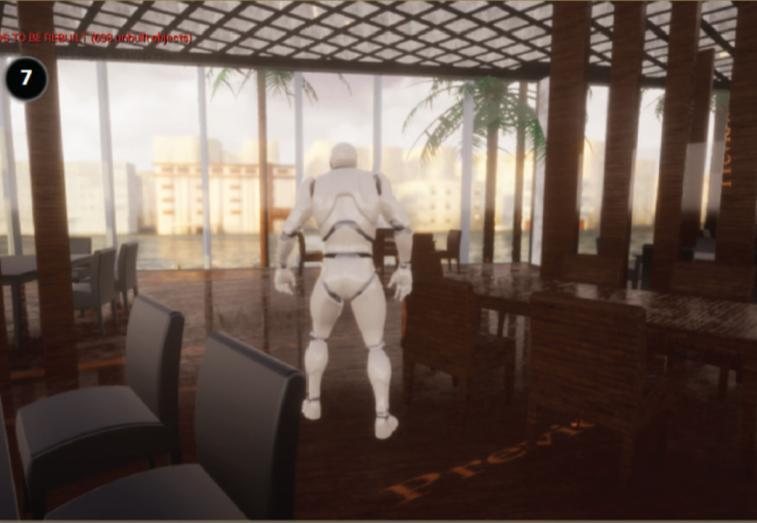
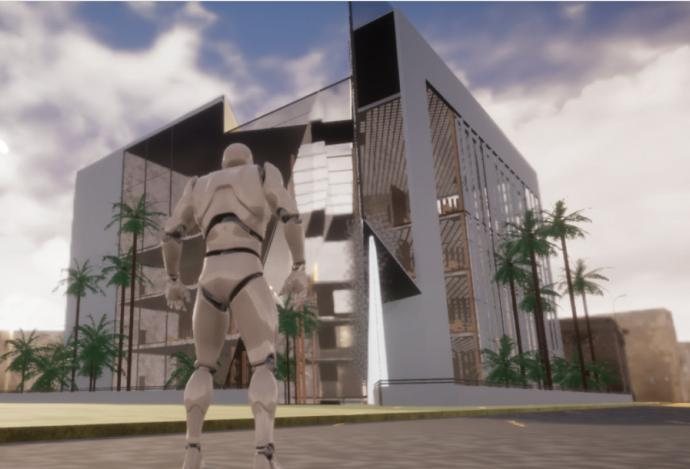
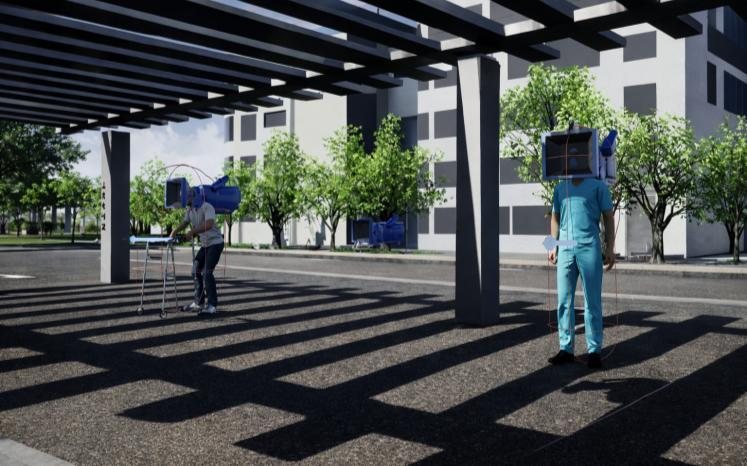
Avatar-based spatial testing.
Teaching students to test design decisions through avatars, movement and user scenarios.
Student Feedback
In students' words.
Provided useful insight on assignments and exercises, helpful to break down difficult work into much easier to understand material.
She was always available for asking questions.
Helped clarify concepts that were brushed over in class during tutorials.
Invited Teaching, Workshops & Mentorship
Teaching beyond the classroom.
Invited instructor for immersive-design and Unity-based spatial-prototyping workshops for architecture, interior-design and furniture-design professionals; produced recorded instructional resources.
Jury member for the Complex Forming Seminar in the Master in Advanced Computation for Architecture & Design, connecting concept, method, computation, representation and spatial experience.
Invited speaker translating participatory research findings with older adults into accessible discussion for a community and academic audience.
Invited instructor for research and academic-writing sessions, supporting students in structuring and communicating scholarly work.
Presentations that translate research findings into accessible discussion for non-specialist and community audiences.
Design review, visualization feedback, writing guidance, and project development for students and early-career architects.